Seed Corn Should Not Be Ground – A Portrait of Käthe Kollwitz (1967)
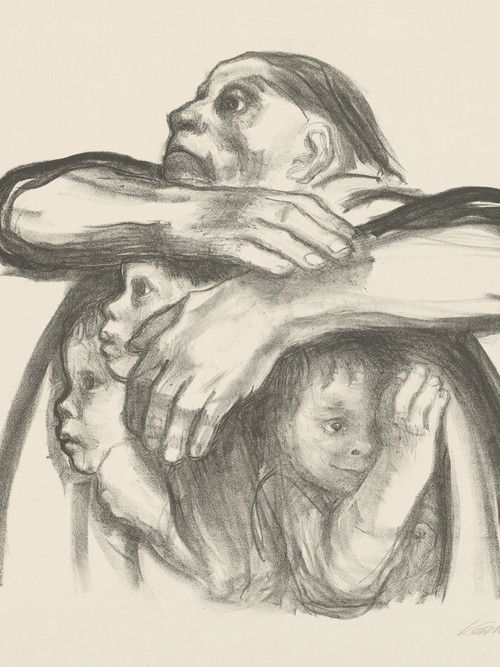
Tetzlaff's documentary combines historic film footage and photographs with quotes from Kollwitz's diary and images of her sculptures and graphic works, including The Weavers' Revolt (1893-97), The Peasant War (1902-08), Woman with the Dead Child (1903) and War (1922-23), her famous series of seven woodcuts.
Director: Kurt Tetzlaff
Genre: Documentary
Runtime: 20 min
Release Date: August 25, 1967
Cast
- Gisela May - (voice)
- Hilmar Thate - (voice)
Screenplay
Music: Peter Rabenalt
Cinematography: Rudolf Müller
Editing: Waltraud Hartmann
Production: DEFA-Studio für Dokumentarfilme
Country: East Germany, Germany
Language: Deutsch
Original Language: de
More Films by Director: Kurt Tetzlaff
More Films in Genre: Documentary
Frequently Asked Questions
- What is Seed Corn Should Not Be Ground – A Portrait of Käthe Kollwitz about?
- Tetzlaff's documentary combines historic film footage and photographs with quotes from Kollwitz's diary and images of her sculptures and graphic works, including The Weavers' Revolt (1893-97), The Peasant War (1902-08), Woman with the Dead Child (1903) and War (1922-23), her famous series of seven woodcuts.
- Who directed Seed Corn Should Not Be Ground – A Portrait of Käthe Kollwitz?
- Seed Corn Should Not Be Ground – A Portrait of Käthe Kollwitz was directed by Kurt Tetzlaff.
- Who stars in Seed Corn Should Not Be Ground – A Portrait of Käthe Kollwitz?
- Seed Corn Should Not Be Ground – A Portrait of Käthe Kollwitz stars Gisela May, Hilmar Thate.
- How long is Seed Corn Should Not Be Ground – A Portrait of Käthe Kollwitz?
- Seed Corn Should Not Be Ground – A Portrait of Käthe Kollwitz has a runtime of 20m (20 minutes).
- What genre is Seed Corn Should Not Be Ground – A Portrait of Käthe Kollwitz?
- Seed Corn Should Not Be Ground – A Portrait of Käthe Kollwitz is a Documentary film.
- Where was Seed Corn Should Not Be Ground – A Portrait of Käthe Kollwitz produced?
- Seed Corn Should Not Be Ground – A Portrait of Käthe Kollwitz was produced in East Germany, Germany.